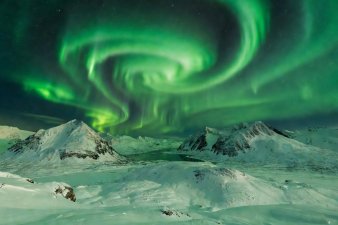
 OPTICS & ATMOSPHERE
WHEN THE SKY CHANGES
From the Novaya Zemlya mirage lifting the sun before dawn to solar pillars and auroral acoustics, discover how polar air redirects photons.
Far north of the 66th parallel, physical laws perform in full view. Distant ice cliffs loom unnaturally high over frozen straits, green light sheets ripple without thunder, and pack ice grinds in complete darkness. Apparent miracles are invitations to understand thermodynamics, refraction, and evolution.
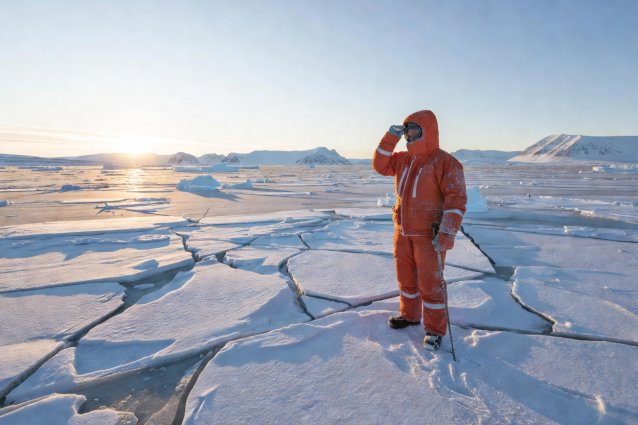
Cold dense surface air trapped beneath warmer upper layers acts like a curved telephoto lens, bending light around Earth's curvature.
Freezing water expels brine through micro-channels. Multi-year floes eventually become fresh enough to drink when melted.
The Arctic is a frozen ocean surrounded by continents; Antarctica is an ice-sheeted continent encircled by ocean currents.
Select any of the four core research domains to investigate documented occurrences, physical mechanics, and verified field notes.
OPTICS & ATMOSPHERE
From the Novaya Zemlya mirage lifting the sun before dawn to solar pillars and auroral acoustics, discover how polar air redirects photons.
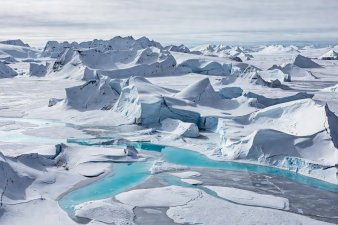 CRYOSPHERE DYNAMICS
Explore frost flowers crystallising salt, polynya open-water paradoxes, and the colossal mechanical force of pressured pack ice floes.
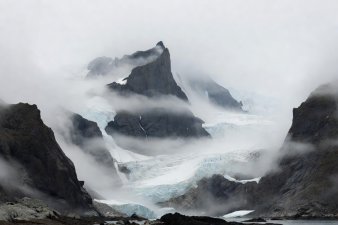 ISOLATED GEOGRAPHY
Remote outposts such as Svalbard, Franz Josef Land, and Wrangel Island hold microclimates, mammoth remains, and early research camps.
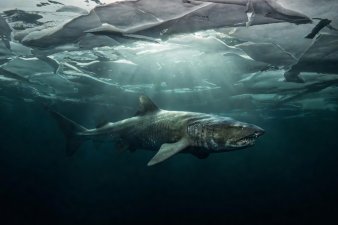 BIOLOGICAL RESILIENCE
Unravel the biology of 400-year-old Greenland sharks, wood frogs freezing solid, and Arctic terns that circumnavigate planetary hemispheres.
Polar explorers frequently wrote of ghostly phantom islands, mountain walls rising where open water was expected, and phantom ships suspended upside down. Every documented instance traces back to extreme thermal stratifications.
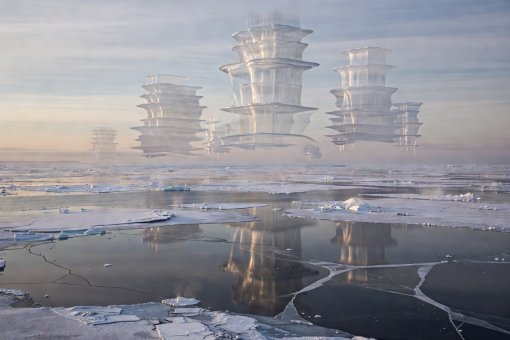
In 1906, explorer Robert Peary claimed to sight a towering mountain chain northwest of Cape Thomas Hubbard, naming it "Croker Land." A subsequent 1913 expedition travelled 130 miles onto hazardous sea ice only to discover Peary had chased a classic superior mirage—a Fata Morgana produced by cold air refracting distant ice mounds into mountainous walls.
When warm air glides across sea ice, light rays bend downwards towards the observer. Distant objects are elevated, stretched vertically, and inverted, deceiving human binocular vision completely.
The Arctic Basin contains landmasses that were among the final terrestrial zones charted on planet Earth.
| Territory | Coordinates | Distinctive Natural Phenomenon | Status |
|---|---|---|---|
| Spitsbergen (Svalbard) | 78° N, 16° E | Midnight Sun for 125 continuous days; global seed vault permafrost storage | Inhabited under 1920 Treaty |
| Wrangel Island | 71° N, 179° W | Last refuge of woolly mammoths (surviving until ~4,000 years ago) | Strict Nature Reserve |
| Franz Josef Land | 80° N, 55° E | 191 uninhabited volcanic islands with permanent glacier domes | National Park Zone |
| Jan Mayen | 70° N, 8° W | Beerenberg active volcano rising abruptly from subpolar Atlantic swells | Norwegian Weather Outpost |
A sample of persistent questions addressed across our notebook entries.
Yes, but under rare atmospheric conditions. Ground microphones and researchers from Aalto University confirmed crackling sounds occur during geomagnetic storms when an inversion layer traps electrostatic charges roughly 70 metres above the surface, discharging when storm fluctuations disrupt the field.
When seawater freezes into frazil crystals, salt is rejected into pockets of brine. Over months and years, gravity pulls this dense brine downward through vertical drainage channels. By the second summer melt, multi-year ice is nearly fresh and can be melted for potable water.
The geographic North Pole rests on moving pack ice floating above roughly 4,200 metres (13,780 feet) of Arctic Ocean water. There is no solid bedrock or landmass beneath the pole, meaning any station placed there drifts continuously with surface currents.
wavesarcticmingl.online is an independent editorial notebook created to separate verified Arctic geophysics, meteorology, and evolutionary adaptations from viral hyperbole and ungrounded folklore. We consult historical polar logs, meteorological records, and cryospheric surveys to provide clear, grounded explanations.
About cookies Essential cookies keep this site working. Optional ones help us see what is useful. You can change your choice at any time. Cookie policy